Poster Board:
9
AI Policy Harmonization in East Africa:
Cultural Sustainability in the New Technological Age
Hope K. McCoy, Innocent Nyalala
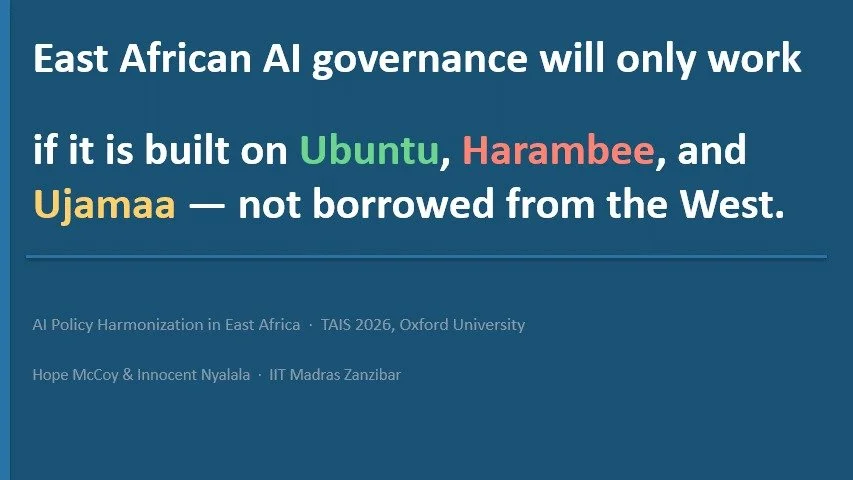
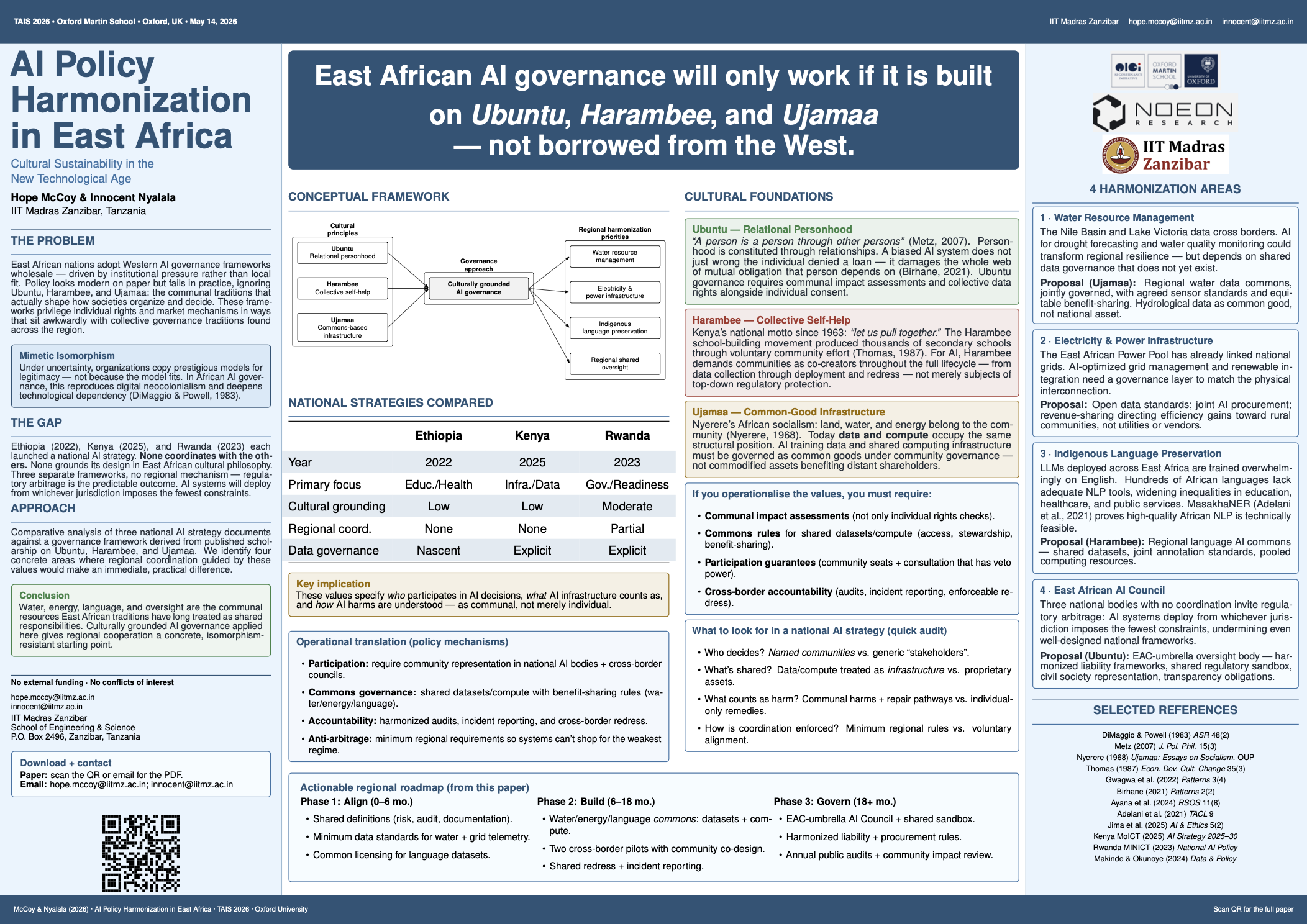
“East African AI governance will only work if it is built on Ubuntu, Harambee, and Ujamaa—not borrowed from the West.”
East African nations often adopt Western AI governance frameworks wholesale, driven by institutional pressure rather than local fit. In African AI governance, mimetic isomorphism can reproduce digital neocolonialism and deepen technological dependency. This essay proposes a culturally grounded, regional approach to AI policy development in East Africa to foster unity, cultural solidarity, and digital sovereignty. Through comparative analysis of three national AI strategy documents (Ethiopia, Kenya, and Rwanda), we identify four areas for policy harmonization: water resource management, electricity and power infrastructure, Indigenous language preservation, and regionally shared oversight. We advocate for a governance framework derived from East African cultural philosophies: Ubuntu, Harambee, and Ujamaa.