Poster Board:
1
When Control Succeeds but Discernment Fails:
Preparing for AI-Assisted Safety Research
Ariel Gil
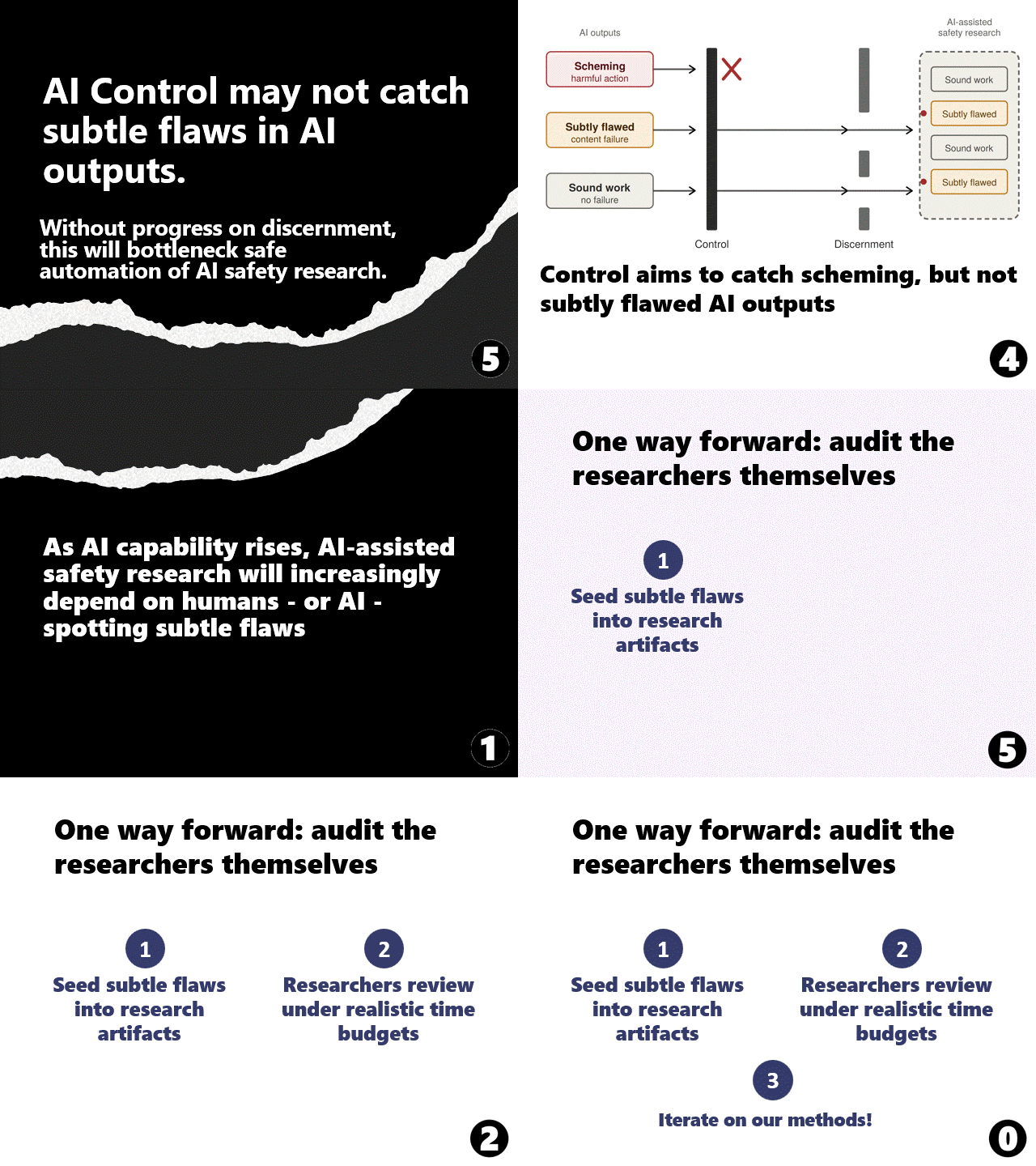
AI systems are increasingly used to accelerate AI safety research, yet our ability to reliably judge the correctness of their outputs—a capacity we term discernment—may not be keeping pace. This paper introduces the ’discernment gap’: the growing difficulty experts face in catching subtle but critical errors in AI-generated safety research. We argue that this gap poses a significant risk, since AI control mechanisms can prevent harmful actions but do not guarantee technical correctness of outputs. This fuels a feedback loop in which perceived control success masks accumulating flaws, eroding risk management. We argue this scenario warrants urgent preparation and recommend (1) empirical testing to measure the discernment gap, (2) enhancing transparency and auditing of safety cases, and (3) strengthening human oversight as necessary complements to AI control.
Road-map: We (i) distinguish behavioural control from content discernment, (ii) show how success in the former can mask failure in the latter, and (iii) propose governance measures that close the gap.